DIY Tankless Water Heater Flush vs. Hiring a Pro: An Honest Comparison
We're a professional tankless water heater flushing company, so you'd expect us to say "always hire a pro." We're not going to do that.
The truth is that DIY tankless water heater flushing is a legitimate option for some homeowners. But it's not the right choice for everyone, and there are important differences between what you can do yourself and what a trained technician does. This is an honest breakdown of both approaches so you can decide what makes sense for your specific situation.
What DIY Tankless Water Heater Flushing Requires
Equipment You'll Need
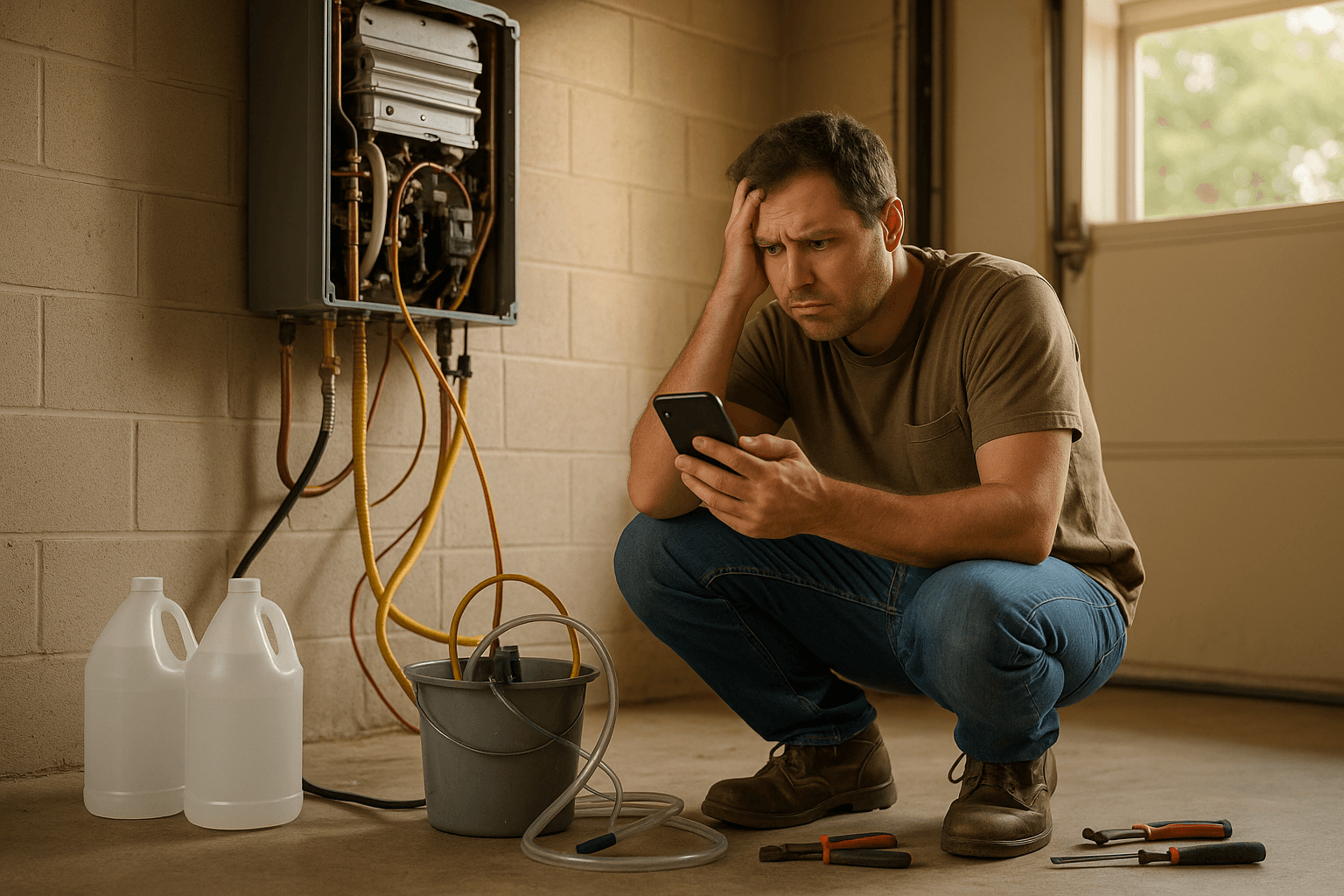
Before you flush your tankless water heater yourself, you need to have—or buy—the following:
- Submersible pump (1/6 HP minimum): $40-$80
- Two 6-foot washing machine hoses: $10-$20
- 5-gallon bucket: $5
- White vinegar (4-5 gallons, undiluted): $15-$25
- Adjustable wrench or channel locks: You probably own these already
- Towels and a drop cloth: For cleanup
Total first-time cost: $70-$130 for the kit, plus $15-$25 per flush for vinegar.
You can also buy pre-assembled flush kits from brands like My PlumbingStuff or Kelaro for $75-$150 that include the pump, hoses, and bucket in one package.
One Critical Prerequisite: Isolation Valves
Your tankless water heater must have isolation valves (also called service valves) installed on both the hot and cold water lines. These are special valves with threaded ports that allow you to connect your flush hoses.
Most tankless units installed in the last 10 years have isolation valves, and many jurisdictions—including most of Orange County—require them by code. But if your unit was installed without them, or you have an older installation, you'll need a plumber to add them first. That installation typically costs $150-$300.
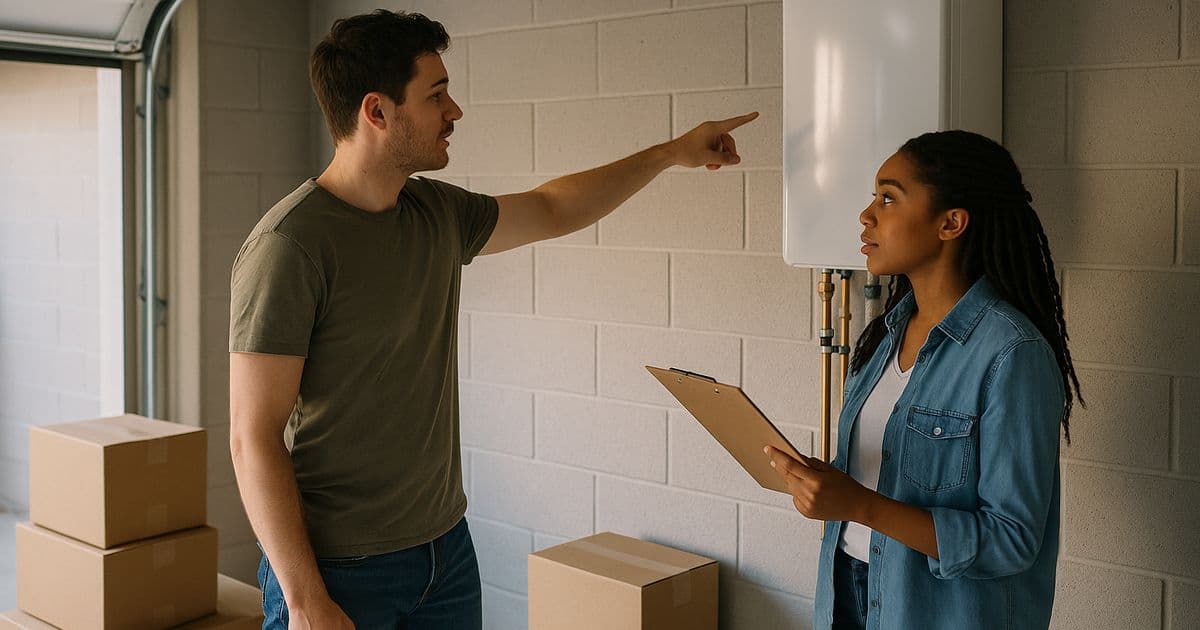
Check your unit now. Look for two valves on the water lines directly below the unit, each with a small capped port. If you see them, you're good to go. If not, you'll need that plumber visit before you can DIY anything.
Step-by-Step DIY Flush Process
Here's the basic process for flushing your tankless water heater yourself:
- Turn off the gas supply (or power for electric units) to the water heater
- Turn off the cold water supply valve to the unit
- Turn off the hot water outlet valve to prevent water from entering your home's plumbing during the flush
- Connect hoses to the isolation valve ports—one from the cold side port to the pump in the bucket, one from the hot side port draining back into the bucket
- Fill the bucket with 4-5 gallons of undiluted white vinegar
- Open the isolation valve ports (the small lever or cap on each valve)
- Turn on the pump and let the vinegar circulate through the heat exchanger for 45-60 minutes
- Turn off the pump and drain the vinegar from the bucket
- Close the isolation valve ports, disconnect the hoses
- Remove and clean the cold water inlet filter (usually a small screen accessible by unscrewing a fitting on the cold water line)
- Open the cold water supply, then the hot water outlet, to flush any remaining vinegar from the system
- Turn the gas (or power) back on and test the unit
The whole process takes about 2-3 hours including setup and cleanup.
What a Professional Does Differently
A professional flush follows the same basic principle—circulating a solution through the heat exchanger—but the execution and scope are substantially different.
Commercial-Grade Descaling Solution
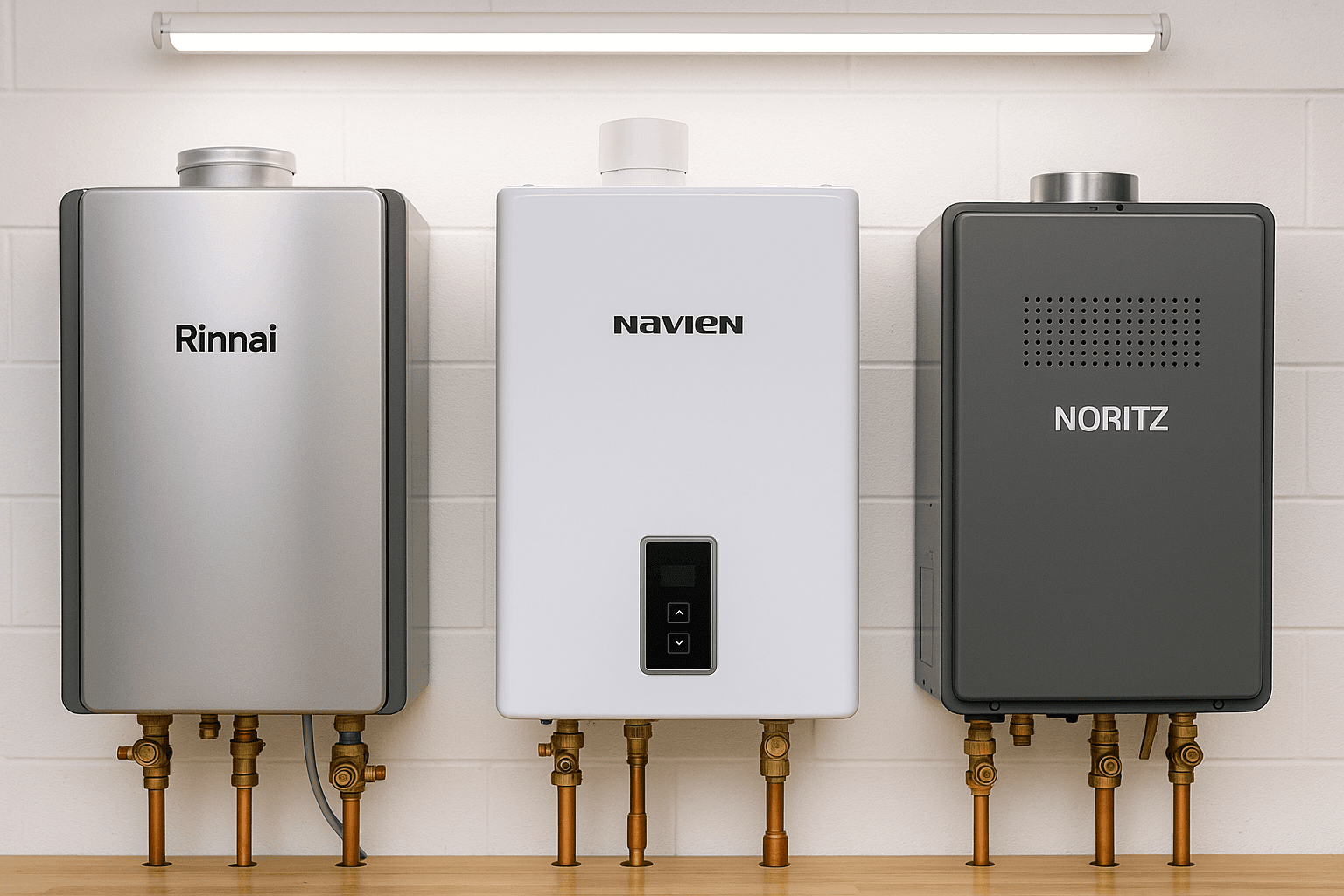
Professionals use commercial descaling solutions specifically formulated for tankless water heaters, not vinegar. These products (brands like Flow-Aide, Hercules Haymaker, or CalciFree) are more effective at dissolving heavy calcium and mineral scale than vinegar. Manufacturers like Rinnai and Navien recommend professional-grade descaling for optimal heat exchanger performance. They work faster, penetrate deeper into thick deposits, and are safe for the copper and stainless steel components inside the unit.
In hard water areas like Orange County, the difference between vinegar and commercial descaler becomes significant. Vinegar may remove 70-80% of light to moderate scale. Commercial descalers consistently remove 95%+ of even heavy buildup.
Comprehensive Inspection
A professional flush isn't just about running solution through the unit. A qualified technician will:
- Inspect gas connections for leaks using a gas sniffer or soap solution
- Check the venting system for proper draft, clearance, and signs of deterioration
- Test the unit's ignition sequence and flame quality
- Examine error code history stored in the unit's diagnostic memory
- Measure flow rate before and after flushing to verify improvement
- Inspect the condensate drain (on condensing units) for blockages
- Check for signs of corrosion on the heat exchanger, gas valve, and connections
- Verify the temperature and pressure relief valve is functioning
This inspection catches early warning signs of component failure, gas leaks, or venting problems that have nothing to do with scale but could cause safety issues or expensive repairs down the road.
Filter Cleaning and Replacement
Professionals clean or replace the cold water inlet filter as part of every flush. They'll also check for secondary filters or strainers specific to your unit's brand and model.
Safety Testing
After reassembly, a professional verifies proper operation by testing gas pressure, confirming no leaks at all connection points, and running the unit through multiple heating cycles to ensure consistent temperature output.
Documentation
Professional service provides a dated, detailed record of work performed—technician name, date, services completed, condition assessment, and any recommendations. This documentation is essential for manufacturer warranty compliance.
Cost Comparison: Real Numbers
| DIY (First Time) | DIY (Subsequent) | Professional | |
|---|---|---|---|
| Equipment/Materials | $70-$130 | $15-$25 | Included |
| Your Time (value) | 2-3 hours | 2-3 hours | 0 hours |
| Descaling Quality | Vinegar (moderate) | Vinegar (moderate) | Commercial-grade (thorough) |
| Inspection | None | None | Full system inspection |
| Documentation | Self-recorded | Self-recorded | Warranty-compliant |
| Safety Testing | Basic (self-check) | Basic (self-check) | Professional verification |
| Total Out-of-Pocket | $70-$130 | $15-$25 | $349 |
If you value your time at $0, DIY is clearly cheaper after the first flush. If you value your time at $50/hour (a reasonable estimate for many Orange County homeowners), the time cost alone adds $100-$150 to every DIY flush, making the real cost comparable. For a detailed breakdown, see our guide on tankless water heater flush costs in Orange County.
Risks of DIY Flushing
We don't want to scare you away from DIY if it's right for your situation, but these are real risks worth understanding:
Incomplete Descaling
Vinegar is less effective than commercial descaler, and the DIY process relies on you running the pump long enough and using enough vinegar. An incomplete flush leaves residual scale that continues to accumulate, potentially giving you a false sense that the job is done when the heat exchanger is still partially restricted.
Warranty Complications
Most manufacturers require "documented professional maintenance" to keep the warranty valid. A self-recorded note that you flushed the unit may or may not be accepted during a warranty claim. This varies by manufacturer and by the claims adjuster reviewing your case, but professional documentation removes all ambiguity.
Potential for Damage
Cross-threading fittings, over-tightening connections, using an incompatible chemical, or failing to properly shut off the gas supply can all cause damage ranging from minor leaks to serious safety hazards. These mistakes are uncommon but not rare among first-time DIYers.
No Professional Eyes on the System
The biggest hidden risk of DIY is that nobody with training is looking at your unit. A slow gas leak, a deteriorating vent connector, or a failing component that hasn't produced an error code yet—these are things a trained technician notices during a routine flush. On your own, you'd never know until something goes wrong.
When DIY Makes Sense
DIY tankless water heater flushing is a reasonable choice when:
- You're handy and comfortable with basic plumbing work
- You have a newer unit (less than 5 years old) with isolation valves already installed
- You live in an area with moderate water hardness (under 200 ppm)
- You're willing to learn the process properly and follow manufacturer guidelines
- You enjoy home maintenance and don't mind spending 2-3 hours on the job
- You're on a tight budget and the $349 professional cost is genuinely prohibitive
When to Hire a Professional
Professional flushing is the better choice when:
- You live in a hard water area like Orange County (250-400 ppm), where commercial-grade descaling makes a meaningful difference
- Your unit is older than 5 years and has never been professionally inspected
- It's your first time flushing the unit and you'd rather see it done correctly before attempting it yourself
- You need warranty-compliant documentation for your records
- You want a professional to inspect the unit for safety and performance issues beyond just scale
- Your unit is showing error codes or performance problems that may indicate issues beyond scale buildup
- You value your time and would rather spend 2-3 hours doing something else
Honest Verdict for Orange County Homeowners
Here's our honest take: if you live in Orange County, professional flushing is almost always worth the investment.
The combination of extremely hard water (which demands more aggressive descaling than vinegar provides), the importance of warranty documentation (given the high cost of heat exchanger replacement), and the value of having trained eyes on your unit regularly makes the $349 professional flush a genuinely good deal for homeowners across our Orange County service area.
Does that mean DIY never makes sense here? No. If you're handy, have a water softener, and your unit is newer, DIY with vinegar between professional visits can extend the time between paid services. Some of our customers do a DIY vinegar flush at the 6-month mark between annual professional flushes, and that's a smart approach.
But as your primary maintenance strategy in Orange County's hard water, DIY alone leaves too much on the table.
Make the Choice That Fits Your Situation
Whether you choose DIY or professional flushing, the most important thing is that you flush your tankless water heater regularly. A DIY flush with vinegar is infinitely better than no flush at all. The EPA recommends regular maintenance for all water heating systems to maintain efficiency and reduce energy waste.
If you'd like professional service, Tankless Flush Pro provides flat-rate $349 flushing throughout Orange County with commercial-grade descaling, full system inspection, and warranty-compliant documentation. No trip fees. No upselling.
Schedule your professional flush today, or grab a flush kit and do it yourself. Just don't skip it.