Did Your Gas Bill Spike? Your Tankless Water Heater Might Be Working Twice as Hard
You opened your SoCal Gas bill, did a double-take, and checked whether rates went up. Maybe they did, slightly. But the number on your bill doesn't match a slight increase. Something in your house is burning more gas than it should, and the most common culprit is the one appliance most homeowners forget to maintain.
Your tankless water heater accounts for 30-40% of your total natural gas consumption. When it's clean and operating at peak efficiency, it's one of the most economical ways to heat water. When it's scaled up from months of hard water exposure, it becomes a gas-burning furnace that works harder and harder to deliver the same hot water you've always used.
Here's how scale turns your efficient tankless unit into a money pit, and what a single maintenance visit can do about it.
How Scale Forces Your Unit to Burn More Gas
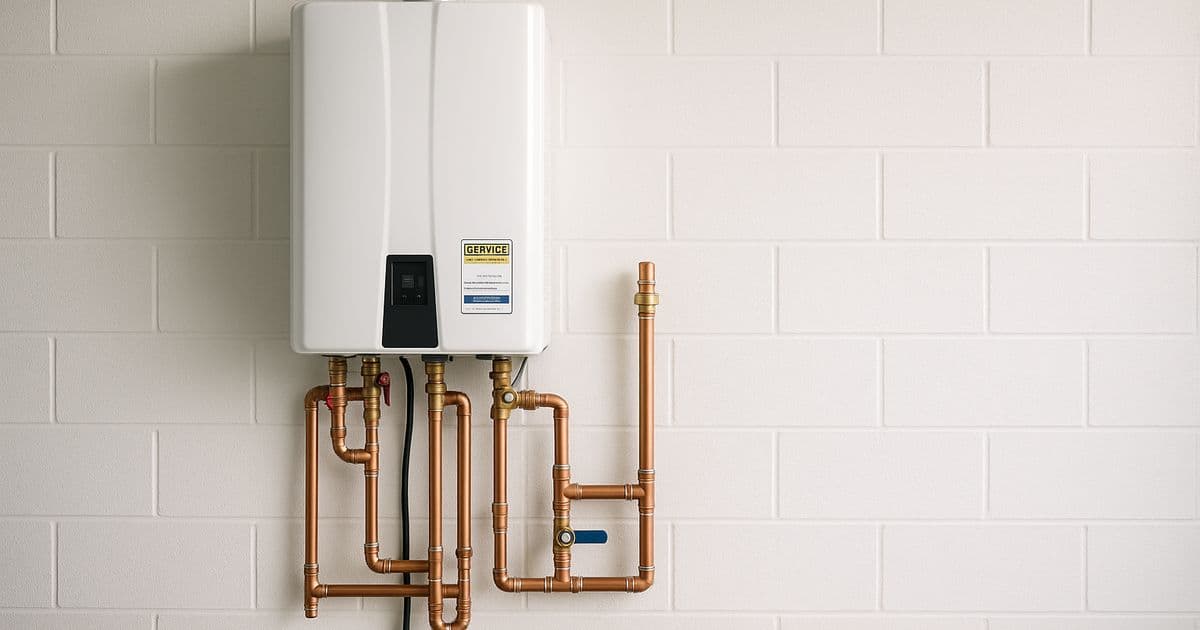
The heat exchanger inside your tankless water heater is a set of narrow copper or stainless steel tubes positioned directly above a gas burner. Cold water flows through those tubes, the burner fires, and the metal transfers heat to the water almost instantly. When the tubes are clean, this process is extraordinarily efficient — north of 95% thermal efficiency on most modern units.
Now picture those tubes coated with a layer of calcium carbonate. This is the white, chalky mineral deposit that accumulates every time hard water passes through the system. Calcium carbonate is a thermal insulator. It doesn't conduct heat well. As the coating thickens, less heat from the burner reaches the water per second.
Your unit responds in one of two ways. It either slows the flow rate to give each gallon more time in the heat exchanger, or the water simply exits at a lower temperature than what you set. In both cases, the burner is firing at the same intensity — burning the same amount of gas — but delivering less useful heat to your water.
The result is that your unit runs longer per heating cycle. More cycles per day. More gas per cycle. Your hot water usage hasn't changed, but your gas consumption has climbed steadily.
The Efficiency Math: 20-40% More Energy Wasted
Research from the Water Quality Research Foundation quantifies this clearly. Just 1/16 of an inch of scale on a heat exchanger — about 1.5mm — reduces heat transfer efficiency by approximately 12%. That's a relatively thin deposit, the kind that can accumulate in as little as 6-9 months in Orange County's hard water.
At the scale thicknesses we routinely find in units that haven't been flushed in 12-18 months — typically 2-3mm — efficiency losses climb to 20-30%. Units neglected for two years or more can lose 40% or more of their heat transfer efficiency.
What That Looks Like on Your Bill
Let's run the numbers for a typical Orange County household.
Average monthly SoCal Gas bill: $120-$160 (varies seasonally)
Percentage attributable to water heating: 30-40%, or roughly $36-$64/month
Efficiency loss from moderate scale buildup (18 months without flushing): 25-30%
Additional monthly gas cost from scale: $9-$19/month
Annual cost of neglecting your flush: $108-$228
These numbers are conservative. They assume moderate scale at steady-state conditions. In reality, scale accumulation accelerates over time because the insulating layer causes the heat exchanger to run hotter, which paradoxically makes minerals precipitate out of the water faster. The longer you wait, the worse the math gets.
A single $349 flush stops this cycle and resets your unit to factory efficiency levels.
SoCal Gas Rates Make This Problem Worse Every Year
Southern California Gas Company has implemented multiple rate adjustments over the past several years. The baseline residential rate has increased significantly, with tiered pricing that penalizes higher consumption. When you're burning 25-30% more gas than necessary because of a scaled heat exchanger, you're not just paying more per therm — you're also more likely to push into higher pricing tiers where each additional therm costs even more.
This creates a compounding effect. Scale increases your gas consumption. Higher consumption pushes you into more expensive rate tiers. The combination means your actual cost increase from scale buildup is often higher than the raw efficiency loss would suggest.
Orange County homeowners who flush their tankless water heaters on schedule consistently stay within lower rate tiers, keeping their per-therm cost down across their entire gas bill — not just the water heating portion.
Other Culprits Behind a High Gas Bill
Before you assume your tankless water heater is the only problem, consider these other common causes of gas bill spikes in Orange County homes.
Furnace or HVAC Inefficiency
If your gas bill spiked during winter months specifically, your furnace may be the primary driver. A dirty filter, failing igniter, or duct leaks can all increase gas consumption significantly. However, if your bill stayed elevated into spring and summer when heating demand drops, the furnace is unlikely to be the sole cause.
Gas Dryer Running More Frequently
A growing household, more laundry loads, or a dryer that takes longer to dry clothes (often due to a clogged vent) can add $15-$25/month to your gas bill.
Gas Leak
A persistent gas smell near your meter, appliances, or gas lines warrants immediate attention. Even a small leak can add meaningfully to your bill. If you suspect a leak, contact SoCal Gas immediately — they'll inspect for free.
Seasonal Rate Changes
SoCal Gas adjusts rates seasonally, and winter rates are typically higher than summer rates. Check whether the rate per therm changed between billing periods before attributing the entire increase to your appliances.
How to Isolate the Water Heater as the Cause
Here's a simple diagnostic. Compare your gas bills from the past 12 months to the same months one or two years prior. If consumption (measured in therms, not dollars) has been climbing gradually and consistently — independent of season — your tankless water heater is the most likely cause. Gradual, steady increases are the fingerprint of progressive scale accumulation.
If the spike was sudden and concentrated in one billing period, look at your other appliances and usage patterns first.
How a Professional Flush Saves $300+ Per Year
The math is straightforward. A professional descaling flush removes the mineral insulation from your heat exchanger and restores it to near-factory heat transfer efficiency. The unit burns less gas per heating cycle, runs fewer cycles per day, and your consumption drops back to where it should be.
Here's the annual savings breakdown for a typical Orange County household:
- Gas savings from restored efficiency: $108-$228/year (based on 25-30% efficiency recovery)
- Avoided rate tier penalties: $40-$80/year (from staying in lower consumption tiers)
- Extended unit lifespan: A clean heat exchanger lasts 15-20 years versus 8-12 years for a neglected one. Avoiding a premature $3,000-$4,500 replacement spreads an additional $200-$500/year in avoided capital cost.
- Total annual value of regular flushing: $348-$808
Against a $349 flush cost, the return on investment is immediate and substantial. Most homeowners recoup the cost of the flush within two to three billing cycles.
Orange County Hard Water Accelerates Everything
If you moved to Orange County from a region with softer water, your maintenance instincts may be calibrated wrong. Orange County's water hardness runs 250-400 parts per million — well above the EPA's "very hard" classification of 180 ppm. Cities in South Orange County like Mission Viejo, Laguna Niguel, and San Clemente routinely exceed 350 ppm.
At these concentrations, scale accumulates on your heat exchanger 2-3 times faster than the national average. A maintenance schedule that works in Portland or Seattle — flushing every 2-3 years — will leave you with a heavily scaled unit and inflated gas bills within 12 months here.
We recommend flushing every 6-9 months for homes without a water softener, and every 12 months for homes with a water softener installed. For more on how Orange County's water quality impacts your unit, read our guide on hard water and tankless water heaters in Orange County.
The Warning Signs That Scale Is Already Costing You
If your gas bill has already spiked, look for these additional indicators that scale is the root cause:
- Temperature fluctuations during showers or at the kitchen sink — a hallmark of scale buildup
- Reduced hot water pressure compared to cold water at the same fixture
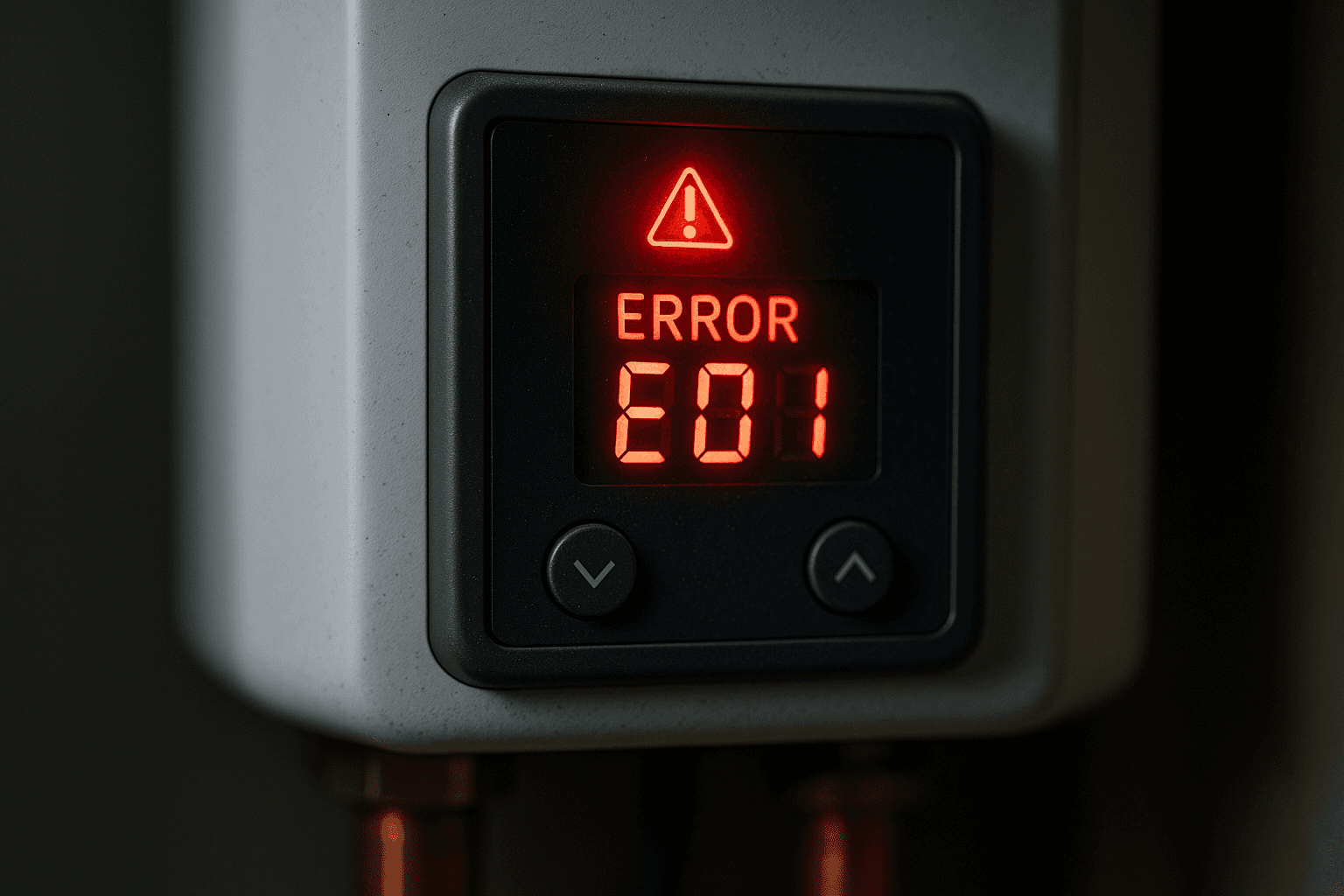
- Error codes on the display panel, particularly Rinnai LC, Navien E016, or Noritz Error 16 — see our complete error code guide to decode what yours means
- Unusual sounds from the unit — popping, rumbling, or gurgling during operation
- It's been 12+ months since the last flush, or the unit has never been flushed
If you're seeing any combination of these alongside a higher gas bill, scale is almost certainly your problem. And the fix is one of the simplest, most cost-effective maintenance services available for any home appliance.
Stop Burning Money Through a Scaled Heat Exchanger
Every month you delay flushing a scaled tankless water heater, you're paying a hidden surcharge on your gas bill. The scale doesn't fix itself. It gets thicker, your efficiency drops further, and your costs climb higher.
Tankless Flush Pro offers flat-rate $349 flushing throughout Orange County — commercial-grade descaling, inlet filter cleaning, full system inspection, and warranty-compliant documentation. No trip fees. No diagnostic charges. Just restored efficiency and lower gas bills starting with your next billing cycle.
Have questions about flushing and efficiency? Check our frequently asked questions or schedule your flush today and find out how much your scaled heat exchanger has been adding to your gas bill.